Leave Your Message
Did you know that the global wellness economy hit a whopping $5.6 trillion in 2022, according to the Global Wellness Institute? And McKinsey & Company estimates that today’s consumer wellness market is around $1.8 trillion. No wonder products like sleep aids, relaxation tools, and personal care items are such hot topics for wholesalers right now. Take Warming Eye Masks, for example — they sit right at that sweet spot where demand and market interest overlap.
But here’s the thing: just because people want these products doesn’t mean they’re guaranteed to be profitable. Wholesale buyers really need to dig into details like how comfortable the product is, whether the heat is consistent, what materials touch the skin, packaging quality, shelf life, and the risks involved with returns. Little things make a big difference — a mask that gets too hot too quickly can turn customers off fast, and a flimsy elastic strap might lead to headaches and complaints after a few uses.
While industry data can point you in the right direction, it’s no substitute for actually testing the product. The American Academy of Sleep Medicine keeps highlighting how many adults struggle with sleep, so practical relaxation products are definitely in demand. But watch out — any sleep-related claims need to be worded carefully and backed by solid evidence. For example, marketing a warming mask as a medical treatment without proper support is just asking for trouble.
This guide will walk you through how to compare different suppliers, various product formats, and quality indicators. We’ll cover everything from disposable, reusable, scented, unscented, to rechargeable designs. Plus, we’ll look at minimum order quantities, how to get samples, options for customization, and ways to protect your shipment. A good supplier should be transparent—they’ll provide clear product specs, batch info, and ongoing communication.
There's no one-size-fits-all formula here. Even attractive-looking samples might behave differently once produced in bulk. So, it’s smart to test out several units—check temperature stability, inspect seams, and gather feedback from users—before you go all in. Yeah, it might slow you down a bit, but it can save you from costly mistakes down the line.
Remember, the best warming eye mask isn’t just the one that feels the warmest. It’s the one that’s safe, consistent, and fits perfectly with your target market. That’s how you make sure you’re offering something people will love and trust.
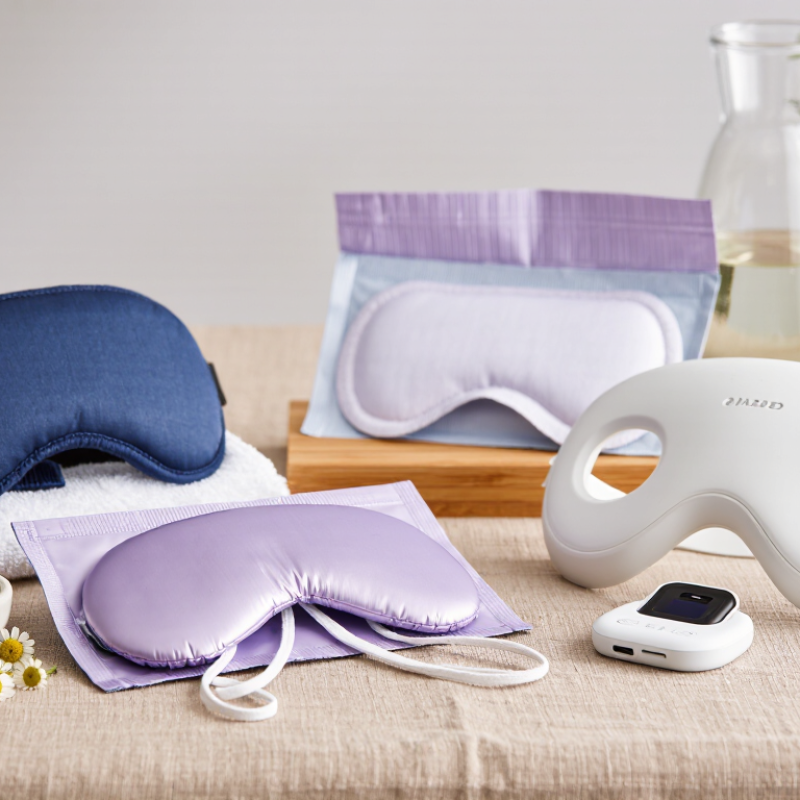
A warming eye mask is a soft eye covering designed to deliver gentle, controlled heat around the eyelids. Unlike a simple sleep mask, it usually contains a reusable heating layer or a carefully regulated warming element. When placed over closed eyes, the warmth may soften oily secretions around the eyelid edges. These secretions help slow tear evaporation.
A Dry Eye Warming Mask can support a practical eyelid-care routine. For example, mild heat may loosen thickened oils in the meibomian glands. This can help improve the tear film’s stability for some users. The mask should feel comfortably warm, never hot. A ten-minute session is often easier to manage than prolonged exposure. Follow the product’s stated temperature and usage instructions.
Wholesale buyers should examine heat consistency, fabric softness, cleaning methods, and fit across different face shapes. A mask that warms only the center may leave the outer eyelids untreated. That detail matters. Check whether the product has automatic temperature control and clear safety guidance. User experience also reveals weaknesses. Some masks feel heavy, while others lose warmth quickly. No design suits everyone. A careful buyer should request samples, test comfort, and review supplier quality records before placing a larger order. Warming is helpful, but it is not a cure for every eye condition. Users with persistent irritation should seek professional advice.
| Evaluation Dimension | Product Type or Specification | How It Works | Typical Performance or Range | Wholesale Selection Considerations |
|---|---|---|---|---|
| Product Definition | Disposable self-heating eye mask | Iron powder inside the mask reacts with oxygen after the package is opened, producing gentle heat through an exothermic oxidation process. | Usually provides warmth for approximately 20–30 minutes, depending on the construction and ambient conditions. | Suitable for single-use hospitality, travel, wellness, and promotional kits. Review packaging quality, activation reliability, and disposal requirements. |
| Product Definition | Reusable gel or bead-filled eye mask | The insert is warmed in a microwave or warm-water bath and then placed inside a fabric cover. | Often delivers approximately 10–20 minutes of usable warmth per heating cycle. | Consider heating instructions, leak resistance, insert durability, cover washability, and customer access to a microwave or hot water. |
| Product Definition | Electric rechargeable warming eye mask | An internal heating element converts electrical energy from a rechargeable battery or USB power source into heat. | Common operating times range from approximately 30–60 minutes per charge, depending on heat level and battery capacity. | Check battery certifications, charging-port durability, control design, cable safety, and compliance requirements for the intended market. |
| Heat Temperature | Low to moderate warming level | Heat is transferred gradually through the mask fabric to the skin around the eyes. | Many consumer warming masks are designed to remain below about 45°C at the contact surface; actual temperature varies by design. | Request independent temperature and burn-risk testing. A lower, stable temperature is generally preferable for extended contact near the eyes. |
| Heating Consistency | Even heat distribution | Heating material or elements are positioned across the eye area to reduce concentrated hot spots. | Performance should remain reasonably consistent across the main warming area during the stated use period. | Ask for temperature-mapping data from multiple samples and production batches rather than relying only on a product photograph. |
| Activation Method | Air-activated | The sealed package limits oxygen exposure; opening the package starts the oxidation reaction. | Usually begins warming within several minutes after opening and reaches its intended warmth progressively. | Evaluate shelf-life, oxygen-barrier packaging, activation time, and whether the product can be resealed after opening. |
| Comfort and Fit | Contoured mask with adjustable or stretch strap | The shape and strap hold the warming surface close to the eye area while allowing the user to rest comfortably. | Fit depends on nose bridge clearance, strap elasticity, mask weight, and the size of the warming panel. | Request samples for different face shapes. Check pressure around the eyes, strap tension, and compatibility with glasses. |
| Materials | Soft nonwoven, cotton-blend, or plush outer fabric | The outer layer separates the heating component from the skin and improves comfort. | Breathable, low-lint materials are generally more comfortable during use. | Verify skin-contact material composition, odor, colorfastness, seam quality, and relevant textile test reports. |
| Safety Features | Temperature control, thermal barrier, and clear warnings | Design features help limit excessive heat and reduce misuse, such as prolonged wear or use while sleeping. | Safety performance depends on product construction, instructions, testing, and quality control. | Require warnings against use on damaged skin, during sleep, or by users unable to remove the mask independently. Confirm market-specific compliance documentation. |
| Hygiene | Single-user disposable or washable reusable design | Disposable products reduce cross-user contact; reusable products require cleaning between uses. | Washable covers should state cleaning limits and drying instructions clearly. | For spas, hotels, and clinics, compare per-use cost, cleaning procedures, packaging hygiene, and storage requirements. |
| Shelf Life | Sealed self-heating mask | The heating ingredients remain inactive while the oxygen-barrier package stays intact. | Many products specify a shelf life of roughly 2–3 years, but the exact period must be confirmed by product testing. | Request the production date, expiry date, storage conditions, and accelerated-aging or stability documentation. |
| Packaging | Individual sachet, retail carton, or multipack | Packaging protects the product from moisture, oxygen, contamination, and physical damage. | Individual packaging supports hygiene and convenience; multipacks can reduce packaging and logistics costs. | Compare carton dimensions, shipping efficiency, multilingual labeling, barcode requirements, and packaging recyclability. |
| Customization | Printed packaging, fabric color, strap design, or insert card | Customization changes the presentation without necessarily changing the heating mechanism. | Lead time and minimum order quantity vary according to the number of customized components. | Request a digital proof and pre-production sample. Confirm color standards, artwork ownership, revision fees, and packaging tolerances. |
| Quality Control | Batch inspection and performance sampling | Testing verifies dimensions, appearance, activation, heat profile, packaging seal, and labeling. | Important checks include seal integrity, activation rate, maximum temperature, heating duration, and odor. | Agree on inspection standards before ordering and request a batch test report or third-party inspection when the order volume is significant. |
| Wholesale Cost | Total landed cost per usable unit | The purchase price is only one part of the final cost; freight, packaging, testing, duties, and defect allowance also affect the result. | Unit pricing commonly decreases as order quantity increases, while customized packaging may increase initial setup costs. | Compare quotations using the same specifications, delivery terms, packaging configuration, testing scope, and replacement policy. |
| Best Use Case | Travel, relaxation, wellness, hospitality, and gift sets | Gentle warmth may support a relaxing experience, but a warming eye mask is not a medical treatment or a substitute for professional care. | Use duration and temperature should follow the product instructions and safety labeling. | Choose the format that matches the user environment: disposable for convenience, reusable for repeated use, or electric for adjustable operation. |
Note: Temperature, heating duration, shelf life, minimum order quantity, and compliance requirements vary by product design and destination market. Always confirm current specifications and test reports before placing a wholesale order.
Dry eye is a common ocular-surface concern, with reported prevalence ranging from approximately 5% to 50% depending on the population and diagnostic criteria, according to the TFOS DEWS II Epidemiology Report. The TFOS DEWS II reports also highlight tear-film instability, inflammation, and meibomian gland dysfunction as important factors in evaporative dry eye. Warm compresses may support eyelid hygiene and help soften meibomian gland secretions, making them a practical part of a gentle daily eye-care routine.
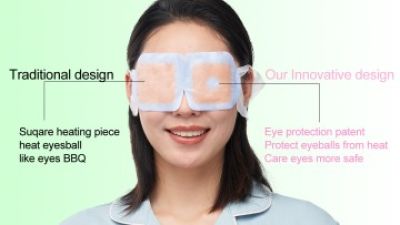
A self-heating steam eye mask is designed to provide convenient, consistent warmth without the need for hot water or reheating. With a temperature maintained at approximately 42°C and a 30–45-minute warming cycle, it offers a comfortable experience for relaxation and routine warm-compress care. The patented “Pupil Protection Ring” design helps create a dedicated central area around the pupils, while the surrounding steam and warmth focus on the eyelids and periocular region. Users should follow the instructions and avoid use over irritated, injured, or infected eyes.
For distributors and professional partners, the product is supported by 18+ years of manufacturing experience and OEM/ODM capabilities. Production qualifications include CE (MDR), ISO 13485, and BSCI, providing a structured foundation for quality management, responsible manufacturing, and market-specific customization.
Disposable steam masks activate after opening and usually warm for 20–30 minutes. Reusable gel masks need refrigeration or hot-water preparation. Electric USB-heated masks offer adjustable temperature and repeated use. Each type fits a different retail setting.
Disposable masks are usually the most practical choice. They need no charger, refrigerator, or preparation. A sealed pouch fits easily beside a hotel towel or travel kit. However, packaging waste should be considered.
Compare heat distribution, temperature, duration, scent strength, and eye pressure. Check whether warmth stays even across both eyes. An automatic shutoff can reduce overheating risks. Comfort matters more than impressive packaging.
Test samples on faces with different shapes. Check the surface after eight minutes of use. Look for stiff edges, weak seams, strong scents, or excessive pressure. A mask may feel comfortable on one person and awkward on another.
Request material reports, skin-contact testing, and clear usage instructions. For electric products, review battery documents, charging details, and safety tests. Ask about inspection procedures and defect handling. Photos cannot reveal every problem.
Check label accuracy, instruction clarity, carton strength, and barcode options. Packaging should protect each unit without creating unnecessary bulk. A crushed carton can damage customer confidence. Small details matter.
Include the unit price, packaging, freight, inspection, payment fees, storage, and expected defects. For example, a $2.40 mask may reach $3.10 after added costs. At 500 units, the product investment would be $1,550. The spreadsheet is useful, but it is not perfect.
Match the order size with proven sales, not factory capacity alone. A 500-unit trial may be safer than ordering 3,000 units immediately. Slow stock can occupy shelves and reduce available cash. I would recheck demand before approving a larger order.
No. Large wellness spending shows interest, but it does not guarantee turnover. Build cautious forecasts with low, expected, and high sales scenarios. Add a 3–5% allowance for damaged units and returns. Market optimism can still mislead buyers.
Choosing the best Warming Eye Mask for wholesale requires more than comparing prices. Buyers should first understand how the mask produces gentle heat, then review available options such as disposable, reusable, steam-based, and powered designs. Materials should be soft, breathable, skin-friendly, and odor-free, while temperature control, heating duration, weight, fit, and ease of use all affect customer comfort. Safety features, clear instructions, and reliable quality testing are also essential for building consumer trust.
Wholesale buyers should compare product specifications, packaging, customization options, production capacity, lead times, and supplier communication. Samples and quality inspections can help confirm comfort, heating performance, durability, and consistency before placing a large order. Finally, calculate the complete cost, including product pricing, packaging, shipping, taxes, and possible customization fees. Reviewing minimum order quantities alongside expected selling prices and profit margins will help buyers select a practical product that balances quality, customer satisfaction, and long-term business value.