Finding the best Under Eye Patchesisn't just about comparing prices or shiny packaging. You really need to dig deeper—check out the materials, formulation quality, experience of the supplier, and what kind of evidence they have to back up their claims. Sure, a soft hydroGel Patch might feel super promising during a quick five-minute test, but don’t forget—comfort and performance can change after longer wear, shipping, or even just sitting in storage. That little detail can actually make a big difference.
This guide lays out seven practical tips for evaluating manufacturers and private-label suppliers. We’re talking about transparency around ingredients, manufacturing standards, stability testing, how well the packaging protects the product, inspecting samples, minimum order limits, and necessary documentation. Always ask for the ingredient list, batch records, safety data sheets, and any relevant quality certificates. Basically, verify what they can actually prove—and don’t fall for vague promises of instant lifting or permanent results. Keep in mind, skincare results vary from person to person.
First thing’s first—get some samples.
Apply each one under similar conditions to really compare. Take notes on how well they stick, if they feel moist or sticky, the scent, any leftover residue, or irritation like redness after removal. Jot down everything—even the small stuff. A supplier that communicates clearly and provides consistent documentation is usually more trustworthy, but don’t take that trust for granted. Test their reliability by requesting samples from more than one batch if you can.
Cost matters, no doubt—who doesn’t want a good deal? But the cheapest option can sometimes cause bigger headaches down the road. For example, weak seals might lead to dried-out patches before your customers even get to try them. Plus, if labels aren’t clear enough, it could delay getting your product approved in the market. Remember, regulations differ from country to country, so getting some qualified legal or regulatory advice isn’t a bad idea. These tips aren’t a substitute for professional testing or local compliance checks, but they help you ask smarter questions and make more confident sourcing choices. There’s no perfect checklist—just careful review to help avoid surprises you really don’t want.
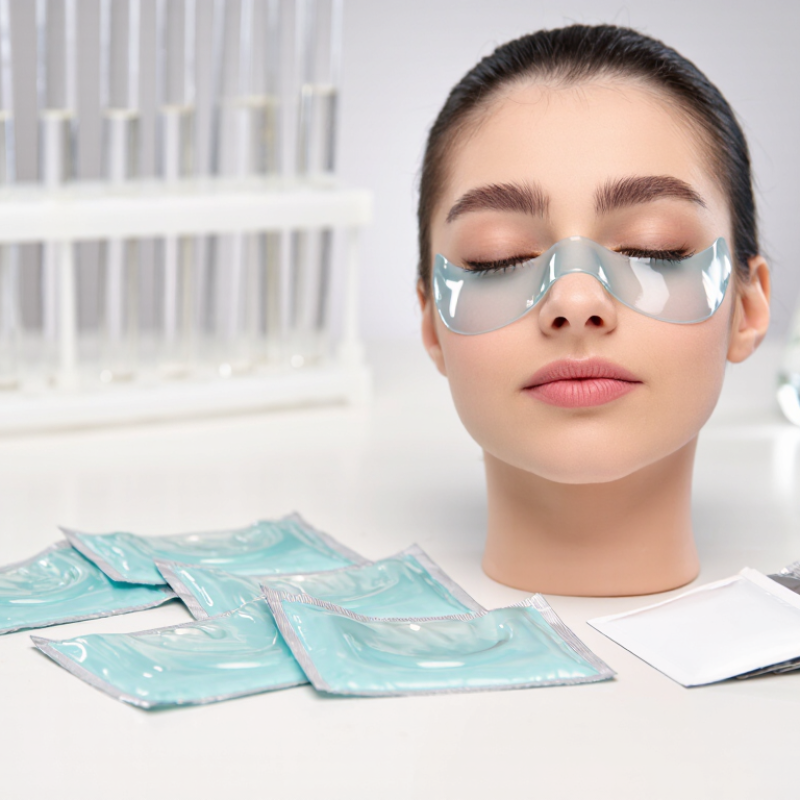
Define Your Under-Eye Patch Sourcing Requirements
Before contacting suppliers, define what your under-eye patches need to do. Are they intended to feel cooling, deliver hydration, or stay in place during a short morning routine? Be specific. “Premium quality” is too vague to guide a useful sample review.
Set practical requirements for the formula, patch shape, material, and pack size. For example, check whether the patches fit beneath different eye shapes without covering the lash line, and whether the material feels comfortable after ten minutes. Note your preferred ingredients and any you want to avoid, then ask suppliers for full ingredient lists and relevant product documentation. Claims should match the available evidence, not just sound appealing.
Write down your expected order volume, target cost, packaging needs, and acceptable production timeline. These details help suppliers provide comparable quotes. Ask how they assess batch consistency and what information they can provide about quality checks. Small details matter. A patch that slips when someone sits upright may fail, even if it looks good in a sample photo. Test samples under ordinary conditions, and record what felt different from your expectations. Some requirements may need revision; that is useful information, not a failure.
Evaluate Ingredients for Safety and Targeted Benefits
7 Tips for Sourcing the Best Under Eye Patches?
Evaluate Ingredients for Safety and Targeted Benefits
Under eye skin is thin, delicate, and easily irritated. I check the full ingredient list before considering a patch. Fragrance-free formulas are often a safer starting point. Essential oils can smell pleasant, but they may trigger stinging or redness. Strong acids also deserve caution around the eyes.
Look for ingredients that match the product’s intended purpose. Humectants such as glycerin and hyaluronic acid can support temporary hydration. Caffeine may help reduce the look of morning puffiness. Peptides can support a smoother appearance, although results vary between users. A cooling gel does not automatically mean better performance. It may simply feel refreshing.
Safety details matter beyond the ingredient list. I prefer sealed packaging, clear usage instructions, and a reasonable storage period. A patch should not be applied over irritated, broken, or freshly treated skin. Patch testing near, but not directly under, the eye can reveal possible sensitivity. Stop using it if burning, swelling, or persistent redness appears.
My screening process is not flawless. Ingredient names can be difficult to interpret, and marketing language sometimes sounds more scientific than the evidence. I would ask for stability testing and irritation assessments when sourcing at scale. Professional review is useful, especially for products designed for sensitive skin. A beautiful package cannot replace transparent documentation.
Check Material Quality, Fit, and Product Performance
Good Under Eye Mask Patches should feel comfortable, stay in place, and deliver consistent results. Check the material before buying. A smooth, flexible hydrogel or soft fabric patch can sit gently beneath the eyes without scratching. Look for clear ingredient information and intact, well-sealed packaging. Fragrance may bother sensitive skin, so simpler formulas can be a sensible choice. Patch-test first. Even gentle products can irritate.
Tip: Check the fit. The wider end should cover the area you want to treat without touching your lash line. Try patches while sitting upright; some slide once you move around. If they bunch, pinch, or need constant adjusting, the shape may not suit your face. I learned that a snug fit matters more than a fancy-looking package.
Tip: Judge performance realistically. Follow the stated wear time and note whether patches stay moist, feel comfortable, and leave skin looking temporarily refreshed. They may help hydrate the under-eye area, but they cannot erase dark circles or replace sleep. Compare results across a few uses, not just one morning. And stop using them if redness or stinging appears.
Verify Supplier Standards, Testing, and Certifications
Ask suppliers for evidence, not polished promises. A useful starting point is ISO 22716:2007, the cosmetics good manufacturing practices standard. Request the current certificate, its issuing body, site address, and scope; check that it covers the factory making your patches. Then compare batch records with the actual product specification, including hydrogel composition, fragrance, and packaging. Small mismatch, big headache.
Tip: Request recent, batch-specific reports from an independent laboratory. For under-eye patches, ask about microbiological limits, preservative effectiveness, stability, and packaging compatibility. The U.S. FDA’s 2022 MoCRA guidance requires responsible persons to keep records supporting adequate safety substantiation. A generic certificate alone does not prove that a finished patch was tested. Review sample identity, test dates, methods, and pass criteria. If the supplier will not share full reports, ask for a redacted copy.
Tip: Verify every claim. A supplier’s “dermatologist tested” statement should come with a protocol, participant count, and adverse-reaction summary; the phrase itself is not a universal certification. Ask whether irritation testing followed a recognized method, such as OECD Test Guideline 439, and whether results apply to the final formula. Imperfect data happens. Missing dates or unclear sample codes should trigger follow-up, not a quick approval.
Compare Pricing, Minimum Orders, and Supply Capacity
When sourcing Cooling Under Eye Patches, compare the full landed cost, not just the unit price. Include packaging, sample fees, freight, and any testing charges in your calculation. Grand View Research estimated the global skincare products market at USD 145.3 billion in 2023, reflecting a broad, competitive category—not a guaranteed demand forecast for eye patches. That scale makes supplier claims worth checking. Ask for tiered quotes at several order volumes, then compare the cost per usable patch. A low quote can hide costly packaging or a high minimum order. Small details matter.
Minimum order quantities should match your sales plan and storage space. Request written terms for samples, production lead times, payment milestones, and replacement of defective goods. Then test a pilot batch. Count patches, inspect pouch seals, and check that the serum has not leaked after transport. The International Trade Centre’s SME Competitiveness Outlook highlights the importance of reliable market access and business capabilities for smaller firms; in practice, dependable supply deserves as much scrutiny as price. Ask suppliers to document monthly output, current production commitments, and backup capacity. Get specifics, not “we can scale.” Capacity figures can change, and I’d recheck them before every large order.
Assess Packaging, Shelf Life, and Storage Conditions
When sourcing Hydrogel Under Eye Patches, packaging deserves the same scrutiny as the formula. Choose sealed, tamper-evident containers that protect each patch from drying out. A secure inner seal matters. Check whether the jar prevents leakage during transport and repeated opening. Clear ingredient and batch information also supports professional quality control. In my experience, attractive packaging can distract from weak protection, so inspect the closure carefully.
A practical tip is to request shelf-life evidence, not only a printed expiry date. Ask for stability data covering appearance, moisture, adhesion, and microbial quality. Confirm the manufacturing date, expiry date, and lot number are easy to trace. The period after opening also matters. A product may remain usable for months unopened but change quickly after exposure to air. This detail is sometimes overlooked.
Storage conditions can protect or weaken performance. Follow the supplier’s recommended temperature range, and avoid prolonged heat, freezing, or direct sunlight. During delivery, review whether cartons show crushing, swelling, or moisture damage. Warehouse staff should record temperature and humidity where possible. Do not guess. A cool room is not always stable enough. I would also test a small shipment before placing a larger order, because real transport conditions may reveal problems that laboratory documents miss.
Request Samples Before Finalizing Your Under-Eye Patch Supplier
7 Tips for Sourcing the Best Under Eye Patches
Request samples before finalizing your under-eye patch supplier. A product photo cannot show serum texture, edge lift, or skin comfort. Ask for several samples from different production batches. Test them on clean skin for 15 to 20 minutes. Check whether the patches stay in place while walking, speaking, or bending. Record redness, dryness, slipping, and residue after removal. For Under Eye Patches For Puffy Eyes, also review cooling comfort and visible hydration claims. These observations provide stronger evidence than attractive catalog language.
Tip: Inspect every detail. Check pouch seals, ingredient labels, batch information, and manufacturing dates. Ask the supplier for test reports and clear storage guidance. Verify that the documents match the supplied sample. A professional supplier should explain material composition, production controls, and complaint handling without avoiding specific questions. Do not approve samples only because they feel pleasant once. Repeat the test on several days. Skin reactions can vary.
Tip: Compare samples fairly. Use the same room temperature, application time, and evaluation notes. Ask whether the final order will match the sample’s thickness, scent, color, and serum volume. Small differences matter. I once underestimated packaging strength because the sample arrived undamaged. That assumption needed correction. Request transport testing before placing a large order. Supplier communication is evidence too. Slow, unclear answers may signal future delays, although one missed message is not conclusive.
Nourish and Refresh Tired Eyes with Full-Coverage Hydrogel Eye Patches
Nourish and refresh tired-looking eyes with full-coverage hydroGel Eye Patches designed to provide a soothing moment of care. Highly loaded with nutrient molecules, the hydrogel texture helps deliver moisture across the delicate eye area, leaving skin feeling softer, smoother, and comfortably hydrated. Its generous coverage hugs the contours beneath and around the eyes, helping relieve the feeling of dryness, fatigue, and puffiness after long days or limited rest.
The gentle, smooth, and comfortable material stays in place while you relax, making it easy to incorporate into a daily skincare routine. As the patch gradually releases its moisturizing essence, the eye area feels refreshed without a heavy or sticky finish. It is suitable for moments when the skin needs added nourishment, whether before makeup, after screen time, or as part of an evening self-care ritual.
Produced in a Medical Grade 100,000 Aseptic Workshop, the patches are made under controlled manufacturing conditions and meet CE, ISO13485, and BSCI standards. Each use offers a clean, convenient way to moisturize and comfort the delicate eye area.
FAQS
Check for smooth, flexible material, clear ingredient details, and sealed packaging. The patch should feel gentle and stay beneath your eyes.
Try them while sitting upright, then move around. They should cover the target area without touching your lash line. A little sliding can be annoying.
They may hydrate the under-eye area and leave it looking temporarily refreshed. They cannot erase dark circles or replace sleep. Results vary.
Apply it to clean skin for 15 to 20 minutes. Walk, speak, and bend slightly. Note slipping, redness, dryness, or residue.
Batch samples can reveal differences in texture, fit, scent, color, and serum volume. One pleasant test is not enough.
Look for intact pouch seals, a secure inner seal, and clear batch information. Check jars for leaks. Pretty packaging proves little.
Request stability evidence, manufacturing and expiry dates, lot numbers, and the period after opening. A printed date alone may not tell the whole story.
Follow the recommended temperature range. Avoid prolonged heat, freezing, and direct sunlight. Inspect cartons for crushing, swelling, or moisture damage.
Stop using it. Patch-test new products first, since even gentle formulas can irritate sensitive skin. Don’t push through discomfort.
Conclusion
Sourcing the best Under Eye Patches starts with clearly defining your product requirements, including the target users, desired benefits, patch shape, size, and application experience. Carefully review the ingredients to ensure they are suitable for the intended market and aligned with goals such as hydration, soothing, or reducing the appearance of tired-looking skin. Material quality, fit, adhesion, comfort, and overall performance should also be evaluated to ensure the patches remain effective and pleasant to use.
A reliable supplier should be able to provide information about production standards, quality testing, and relevant certifications. Compare pricing, minimum order quantities, production capacity, and lead times to determine whether the supplier can support your business consistently. Packaging should protect the product, communicate essential information clearly, and support appropriate shelf life and storage conditions. Before making a final decision, request samples and assess their appearance, texture, packaging, performance, and consistency to reduce risks and select the most suitable supplier.