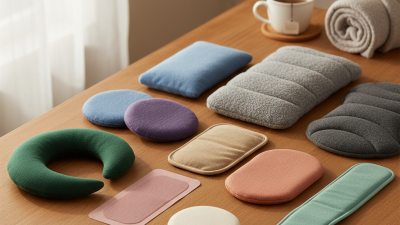
Heat Pads have really become a must-have for buyers all around the world because they’re such a practical and portable way to stay warm and comfortable day-to-day. Retailers, distributors, and even healthcare suppliers are on the lookout for reliable options—whether it's for travel, outdoor work, managing menstrual discomfort, or just quick relief from sore muscles. A well-made heat pad that provides steady warmth without needing electricity is super handy—it can be used at home, at work, or even in emergency kits when you're on the go.
But here’s the thing: when you're choosing what to buy, price isn’t the only thing to consider. Product people should also look into how long the heat lasts, how well they can control the temperature, what materials touch the skin, the quality of the packaging, and how stable the product is over time. Don’t forget to ask for safety certifications, batch info, clear instructions, and if possible, independent test results. Different markets might have special rules, so responsible suppliers should always verify the relevant regulations around labeling, safety, and product standards before shipping out. Small details really do make a difference—things like adhesive that doesn’t hold, confusing warnings, or inconsistent heat levels can quickly turn off customers and hurt trust.
Plus, people search for heat pads using all sorts of terms—like 'Heat Patch,' 'menstrual heat patch,' 'back pain heat patch,' 'stick-on heat patches,' or 'warming patch.' These keywords are useful for organizing products, but they shouldn’t replace professional evaluation and proper safety checks. Remember, heat pads aren’t a cure—never sell them as a substitute for medical advice. Buyers around the globe need honest claims, traceable manufacturing, and good after-sales support. And, just a heads-up: a warmer product isn’t always better—quality and safety matter more. Regular testing, listening to user feedback, and ongoing reviews are key to keeping your international sourcing reliable and trustworthy.
What Are Heat Pads and How Do They Work?
Heat pads are flexible products designed to deliver controlled warmth to a specific body area. They may contain electrical heating elements, reusable gel, or materials that warm after exposure to air. The heat relaxes tight muscles and may improve local blood flow. It can also reduce the uncomfortable feeling caused by stiffness or mild muscle tension.
For global buyers, understanding the heating method matters. Electric pads usually offer adjustable temperatures and steady warmth. Gel pads can be heated or cooled, but they need careful handling. Air-activated pads are portable and convenient, although their heat level may be less consistent. A reliable product should include clear instructions, stable temperature control, secure wiring, and skin-safe materials. In practical use, place a thin cloth between the pad and skin. Never sleep with an active electric pad. Skin can burn before discomfort becomes obvious.
Tips: Check voltage compatibility before international purchasing. Confirm plug standards, labeling, packaging, and user instructions for the destination market. Test the heat gradually, especially for older users or people with reduced sensitivity. Keep the pad dry unless its instructions state otherwise. Do not use it over damaged skin. Heat pads are useful, but they are not perfect medical solutions. Excessive warmth can create problems. When pain persists, professional medical advice remains the safer choice.
Heat Padsare essential for global buyers because comfort needs vary across climates, homes, and workplaces. The right type depends on duration, power access, skin sensitivity, and shipping conditions. Disposable Heat Pads contain air-activated materials and usually provide several hours of warmth. They suit travel, outdoor work, and emergency comfort. However, their packaging creates more waste. That matters.
Reusable gel pads can be warmed in hot water or a microwave. They are practical for home use and repeated applications. Electric heat pads offer adjustable temperatures and stable warmth near a power outlet.
Buyers should check plug types, voltage ratings, insulation, and local electrical requirements. Adhesive body warmers are lightweight, but they should not touch damaged skin. Some users may experience irritation, even when instructions are followed.
Tips: Select products with clear temperature ranges, usage times, and safety warnings. Test warmth briefly before longer contact. A soft cloth can reduce direct heat on sensitive skin. For international sourcing, request material details, inspection records, and packaging information. Confirm storage conditions, especially for chemical or gel-based products. I have found that “universal” products are not always universal; adapters, humidity, and user habits can change performance. Also, advertised heating times may differ in cold warehouses or windy environments.
Heat pads offer global buyers a practical response to a widespread health need. The World Health Organization reported that low back pain affected about 619 million people in 2020. It may reach 843 million by 2050. This creates strong demand for accessible, non-drug comfort products. For users searching Heat Pads Back Pain solutions, gentle warmth can relax tense muscles and support temporary pain relief.
Evidence remains useful, but not perfect. A Cochrane review found that superficial heat may provide small, short-term benefits for acute or subacute low back pain. The evidence quality was limited. Therefore, responsible buyers should avoid cure-related claims. They should evaluate heat settings, automatic shut-off, washable covers, controller durability, and skin-contact materials. For international sales, voltage options, plug types, labeling, and applicable electrical safety requirements also matter. A product that feels warm in testing may become unsafe without reliable temperature control.
Tips: Ask suppliers for temperature-uniformity tests, overheating protection records, and material compliance documents. Test the pad on different body sizes and clothing layers. Packaging should explain usage time, cleaning limits, and warning signs clearly. I would also request independent inspection before large orders. Factory samples can look excellent, yet performance may change during mass production. Temperature comfort differs across climates, age groups, and user expectations. That detail is easy to overlook.
Why Are Heat Pads Essential for Global Buyers?
How Should Buyers Choose the Right Heat Pad?
Choosing a heat pad starts with the user’s real environment. A compact pad may suit office workers, while a larger model supports broader areas at home. Check the voltage, plug type, and frequency before placing a global order. Electrical compatibility is essential. It prevents avoidable returns and safety concerns.
Temperature control deserves close attention. Look for several heat levels, stable warming, and an automatic shutoff function. A washable cover can improve hygiene, especially in shared households. Buyers should also inspect fabric quality, wiring protection, controller clarity, and product instructions. Materials should feel soft, but not trap excessive heat. A higher temperature is not always better. In practice, many buyers focus on price and overlook storage, cleaning, and cable length.
Tips: Ask suppliers for test reports, operating instructions, and samples before purchasing in volume. Confirm compliance with the destination market’s electrical and consumer safety requirements. Test the pad on different surfaces, then record heating time and temperature consistency. A sample may perform well once, yet fail after repeated folding. That possibility deserves attention. Also, define the intended use clearly, because a pad for comfort may require different features from one designed for outdoor work. Supplier communication can be imperfect, so written specifications are safer than verbal promises.
| Evaluation Dimension | Electric Heat Pad | Reusable Chemical Heat Pad | Disposable Air-Activated Heat Pad | USB-Powered Heat Pad | What Global Buyers Should Check |
|---|---|---|---|---|---|
| Operating Principle | Electrical resistance elements convert electricity into heat. | A supersaturated salt solution crystallizes after activation and releases heat; boiling is normally required to reset it. | Iron powder gradually oxidizes when exposed to air, producing heat. | Electrical resistance heating supplied through a USB connection or power bank. | Confirm the heating mechanism, activation process, reset method, and compatibility with the intended market. |
| Typical Heat Duration | Approximately 1–8 hours, depending on power setting, size, and controller design. | Approximately 30 minutes–3 hours per activation, depending on size and formulation. | Approximately 6–24 hours, depending on product size, airflow, and ambient temperature. | Approximately 2–8 hours, depending on power-bank capacity, wattage, and heat setting. | Request test results under defined ambient temperature, load, and usage conditions rather than relying only on marketing claims. |
| Typical Surface Temperature | Approximately 35–55°C (95–131°F), with some models offering adjustable settings. | Approximately 40–55°C (104–131°F) during the main heating period. | Approximately 40–.55°C (104–131°F), with gradual heat generation. | Approximately 35–55°C (95–131°F), depending on input power and control system. | Verify the maximum accessible temperature, temperature uniformity, and risk of skin burns during continuous use. |
| Power Requirement | Commonly mains-powered; electrical specifications vary by destination market. | No external power is required; hot water is generally needed for resetting. | No external power is required; oxygen exposure activates the heating reaction. | Commonly powered by 5V USB input; actual current and wattage depend on the design. | Check voltage, plug type, USB requirements, adapter inclusion, and compatibility with local electrical systems. |
| Temperature Control | Usually offers low, medium, and high settings; some products use electronic sensors. | Usually has limited user control after activation. | Normally has limited or no user-adjustable control. | May provide multiple settings through an inline controller or connected control unit. | Prioritize overheat protection, automatic shutoff, stable temperature regulation, and clear controls. |
| Portability | Portable, but use is limited by access to a socket unless paired with a suitable power source. | Highly portable and suitable for repeated outdoor use. | Highly portable and lightweight; commonly designed for single-use applications. | Portable when used with a compatible power bank, laptop, or USB adapter. | Compare product weight, cable length, pack size, storage requirements, and use during travel or outdoor activities. |
| Reusability | Generally reusable for many cycles when the heating element and controller remain functional. | Reusable, but the activation capsule and sealing system can wear over time. | Single-use; disposal is required after the heating ingredients are exhausted. | Generally reusable for many cycles, subject to cable, controller, and heating-element durability. | Compare expected service life, replacement parts, warranty terms, and the cost per use. |
| Moisture Resistance | Must be specifically rated; many electric products should not be immersed or machine-washed. | Usually resistant to normal surface moisture when the pouch remains intact. | Requires an intact outer pouch; moisture can affect activation and performance. | Must be specifically rated; the USB connector and controller require particular protection. | Check ingress-protection claims, washing instructions, sealed seams, and whether the product is suitable for outdoor use. |
| Safety Features | Look for overheat protection, insulation, temperature control, strain relief, and automatic shutoff. | Look for leak-resistant construction, durable activation tabs, and clear warnings about hot-water resetting. | Look for breathable but secure packaging, skin-contact warnings, and instructions against direct prolonged contact. | Look for overcurrent protection, temperature control, connector durability, and safe cable routing. | Require documented safety testing and clear instructions for duration of use, skin contact, storage, and disposal. |
| User Comfort | Can provide consistent heat and may include soft, washable covers. | Flexible and lightweight, but the heating bead or liquid pouch may feel firm after activation. | Thin and convenient, but airflow and adhesive placement can affect comfort. | Often flexible and lightweight, although the cable may restrict movement. | Evaluate softness, flexibility, edge finishing, fastening method, noise, cable placement, and skin-contact materials. |
| Common Applications | Home relaxation, back and shoulder use, menstrual comfort, and therapeutic heat applications. | Outdoor activities, emergency warmth, hand warming, and repeated personal use. | Travel, commuting, outdoor activities, sports events, and temporary personal warming. | Travel, office use, vehicles, camping, and locations with USB power availability. | Select the type according to duration, mobility, access to power, frequency of use, and local consumer expectations. |
| Shipping Considerations | Usually shipped as an electrical product; adapters and batteries may affect transport requirements. | Generally shipped without an active heat source, but liquid contents and packaging integrity must be considered. | Air-activated products may require transport and labeling review because they contain iron powder and other reactive ingredients. | USB products are generally straightforward to ship, but bundled power banks or lithium batteries may trigger additional requirements. | Confirm customs classification, dangerous-goods status where applicable, packaging tests, labeling, and destination-country import rules. |
| Environmental Considerations | Reusable, but electronic components and cables require appropriate end-of-life handling. | Reusable and potentially lower-waste per use, although damaged pouches require careful disposal. | Creates waste after one use; packaging and used contents should be handled according to local waste rules. | Reusable, but electronic components and any supplied battery require separate recycling pathways. | Compare service life, packaging volume, recycled-material content, repairability, and end-of-life instructions. |
| Documentation for Importers | User manual, electrical specifications, test reports, conformity documentation, and country-specific labeling. | Material information, operating instructions, leakage precautions, and product safety documentation. | Ingredient or material information, safety data where applicable, activation instructions, and disposal guidance. | Electrical specifications, USB input limits, controller details, test reports, and battery documents if included. | Request complete technical files before ordering, including packaging artwork, warning labels, inspection standards, and traceability information. |
| Best Choice When | Users need adjustable, repeatable heat and have reliable access to electrical power. | Users need repeated portable heating without electricity and accept a manual reset process. | Users prioritize convenience, long single-use duration, and minimal preparation. | Users need portable reusable heating and have access to a compatible USB power source. | Match the product to the use scenario first, then compare safety, compliance, landed cost, durability, and user comfort. |
Heat Pads For Period Pain can offer gentle, controlled warmth, but safety must guide every purchase. Buyers should inspect the product’s target-market requirements, not rely on attractive packaging or vague claims. For electrical models, check recognized testing against standards such as IEC 60335-2-17 or the relevant national equivalent. Some markets may also require marks such as CE, UKCA, or UL certification. Requirements differ by country.
A trustworthy supplier should provide a declaration of conformity, test reports, and clear model numbers. Verify whether an accredited laboratory issued the documents. Check for overheat protection, automatic shut-off, insulated wiring, washable-cover instructions, and temperature controls. The label should show voltage, wattage, operating instructions, and warnings against sleeping with the pad when prohibited. A certification mark alone is not enough. I have seen buyers overlook instructions because the product looked simple. That assumption can create avoidable risks.
Tips: Ask for current documents before ordering samples. Confirm the certificate matches the exact model. Review plug type, voltage, packaging language, and importer information. Test the timer and temperature settings during quality inspection. Do not treat RoHS or REACH compliance as proof of electrical safety; they address different concerns. If a supplier cannot explain the testing scope, pause the purchase. Some requirements remain unclear across markets, so local regulatory advice may still be necessary.
Heat pads can provide controlled therapeutic warmth, but buyers must verify electrical compatibility, temperature control, insulation, overheating protection, and resistance to abnormal operation before importing or distributing them.
The voltage rating of the heat pad must match the destination market. Using the wrong voltage can create overheating, fire, electric-shock, or product-failure risks.
Global buyers need a practical way to compare heat pads before placing large orders. For Stick On Heat Pads, price alone can hide important differences. A lower quotation may reflect thinner materials, shorter heating time, or weaker adhesive. Ask suppliers for samples, technical specifications, and recent batch records. Test each pad on packaging, skin-safe backing, heating duration, and surface temperature.
Q Quality should be measured, not assumed. During sample reviews, record how quickly each pad warms and whether heat remains consistent after several hours. Check the adhesive after movement, humidity exposure, and removal. The package should show clear instructions, storage conditions, production dates, and safety information. Independent testing can add confidence, especially when product claims seem unusually strong. I once overlooked adhesive performance because the heating result looked impressive. That was a costly lesson.
Supply reliability requires more than a promised delivery date. Compare production capacity, minimum order quantities, material sources, inspection procedures, and backup plans. Request a written lead-time schedule for samples, production, and shipment. Suppliers with stable communication usually reveal delays earlier. Still, communication is not proof. Review shipment records and confirm whether quality remains consistent across repeated orders. Include acceptable tolerance ranges in the purchase agreement. A slightly higher unit cost may be reasonable when it reduces returns, delays, and customer complaints. Yet buyers should challenge every surcharge. Small details matter.
: Common options include disposable, reusable gel, electric, and adhesive heat pads. Each suits different routines and environments.
Disposable pads activate through air and usually provide warmth for several hours. They are lightweight and convenient. Packaging creates extra waste.
Warm them in hot water or a microwave, following the instructions carefully. They suit repeated home use and can be stored between applications.
Check temperature settings, automatic shut-off, insulation, plug type, and voltage ratings. Local electrical requirements matter. “Universal” is not always universal.
They are lightweight, but should not touch damaged skin. Some users may develop irritation, even when instructions are followed.
Gentle surface warmth may relax tense muscles and provide temporary relief. Evidence suggests small, short-term benefits for some cases. It is not a cure.
Test the warmth briefly before longer contact. Place a soft cloth between the pad and sensitive skin. Stop using it if burning or irritation appears.
Request material details, temperature tests, inspection records, safety documents, and packaging information. Confirm storage conditions for gel or chemical products.
Cold warehouses, wind, humidity, and clothing layers can change performance. A sample may work well, but mass production can differ. That deserves checking.
Heat Pads are practical warming products designed to provide controlled, localized heat for comfort, relaxation, and everyday temperature management. They may use disposable chemical reactions, rechargeable power, electrical heating elements, or reusable materials that can be warmed and cooled according to product instructions. Global buyers can choose from body patches, belts, wraps, cushions, hand warmers, and larger therapeutic-style pads, depending on intended use, portability, heating duration, and target market.
When selecting Heat Pads, buyers should evaluate temperature control, heating consistency, material quality, user comfort, packaging, shelf life, and ease of use. Safety should be a priority, including protection against overheating, clear instructions, suitable insulation, and compliance with applicable regional standards and certifications. Buyers should also compare total cost rather than unit price alone, considering durability, testing, minimum order quantities, lead times, production capacity, and supplier communication. A dependable product combines reliable performance, documented quality control, transparent compliance information, and stable supply support for different global markets.